
Hearing Tests
Not sure whether you need a quick hearing check or a full consultation? We offer two appointment options depending on what you need.
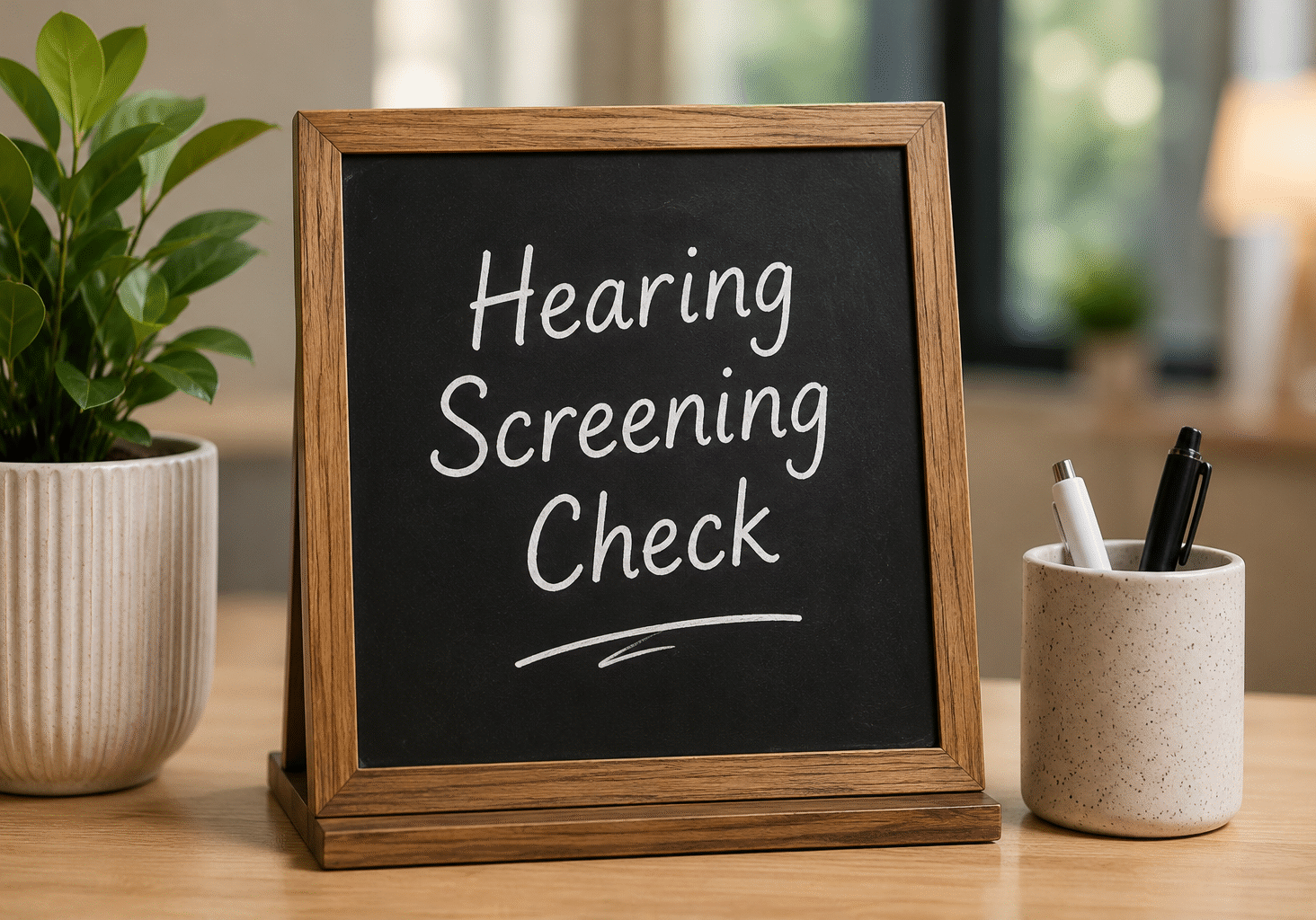
Hearing Screening Check
30 minutes - £35
A short appointment for people who have never had a hearing test before, or who simply want to know whether their hearing may need further investigation.
This is a good choice if you have started asking people to repeat themselves, the TV seems less clear, or family members have mentioned your hearing.
During this appointment we will check your ears, carry out a screening hearing check, and explain clearly whether a more detailed assessment is recommended.
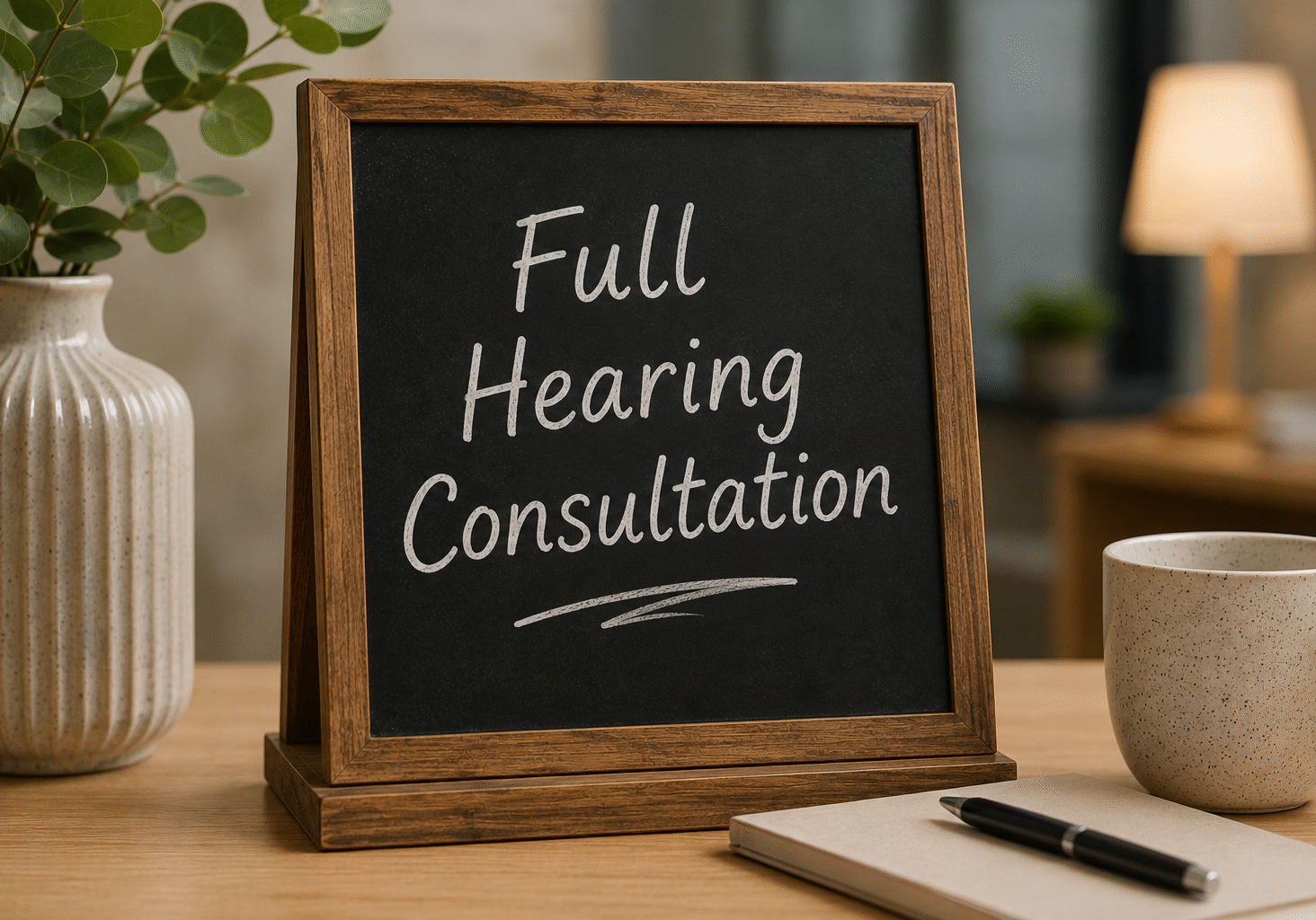
Full Hearing Consultation
90 minutes - £49
A full consultation is best if your hearing is already affecting everyday life, or if you would like to discuss hearing aid options properly.
This appointment gives us time to understand your hearing, lifestyle and listening needs, carry out a more detailed hearing assessment, explain your results, and talk through suitable options if hearing aids may help.
There is no pressure to make a decision. The aim is to give you clear, honest advice so you know what your options are.
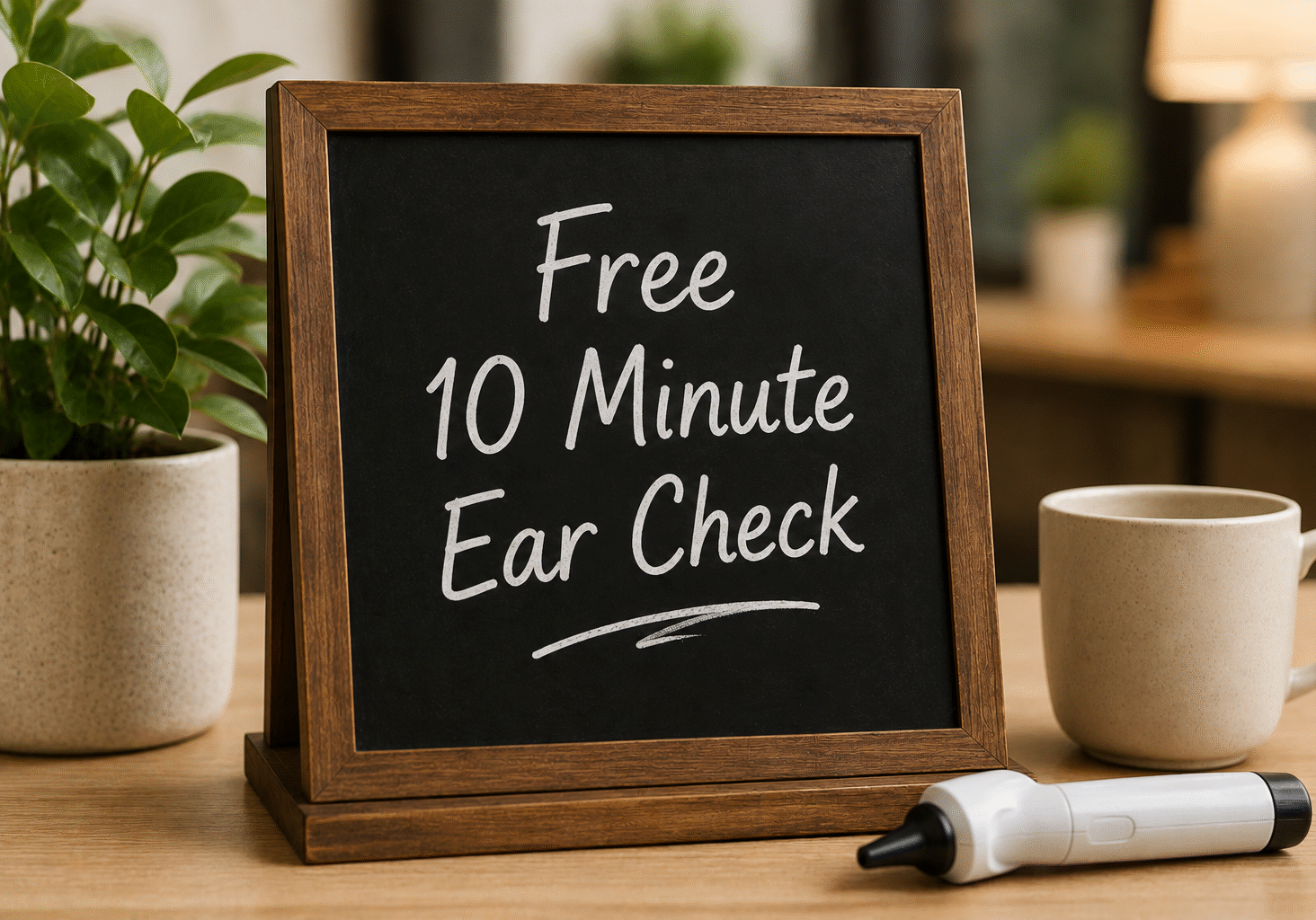
Free 10 Minute Ear Check
If your ear feels blocked or muffled and you think wax may be the issue, start with a free 10-minute outer ear check.
We can put a small camera in your ear and check for blockages and general outer ear health. You'll be able to see in your ear too - only if you want to! This can rule out a simple wax issue.
What might you notice as your hearing starts to deteriorate?
As we get older our hearing naturally becomes less sensitive. The little hairs in the cochlea get damaged through usage and this makes them less likely to react to certain sounds. In the early stages of hearing loss we don't really notice any drop in volume - things are the right 'loudness', but they seems less distinct. Speech is a bit 'woolly' or muffled. Some specific things you might notice are:
- People might sound like they are mumbling or not speaking clearly - this is particularly noticeable when you are not facing the speaker
- You might like the TV up a bit louder than other people - you may even have started using subtitles
- Social situations can be challenging. You may try to avoid places that are too noisy
- You might find yourself asking people to repeat themselves more often
- People with accents, especially on the phone might be much harder to follow than they used to be
- You may miss beepers and buzzers or things like the indicator sound on your car
- Other people might comment on sounds you can't hear like birds singing
- You may find that you feel you're having to put in a lot more effort than other people in group situations to follow the conversation
Causes Of Hearing Loss
As we get older the tiny sensory hairs in the cochlea get damaged simply through usage. We can't stop it from happening, but the speed and extend of the damage will be influenced by genes and lifestyle.
Conditions like otosclerosis (in which one of the bones in the middle ear seizes up and so doesn't transfer as much sound); dislocation of the middle bones perhaps through head injury or glue ear brought on by eustachian tube dysfunction can all have the effect of significantly 'dulling' the intensity of sounds.
Excessive noise damages the same delicate hairs in the cochlea, but usually more extensively than through age alone. The amount of damage depends on the intensity, regularity and continuity of the sound. Interestingly, regardless of the pitch of the excessive noise, it is almost exclusively the high frequencies that get damaged most.
The outer can be affected by a build up of excessive wax; outer ear infections; perforated ear drum through physical trauma or perhaps sudden changes in atmospheric pressure; stenosis (a significant narrowing of the ear canal)
There are certain drugs that are toxic to the ears. Just like with any other possible side effect of medication - it will only affect a few people. These include: the 'olol' family- bisoprolol, atenolol and propranolol; loop diuretics (to treat high BP and heart failure) furosemide, Bumetanide; Quinine (in high doses only) to treat malaria; pain relivers (again at high doses only) like aspirin and ibuprofen and cancer drugs like Cisplatin, Carboplatin and aminoglycoside antibiotics like Gentamycin, Streptomycin, Neomycin.
This is an inner ear condition that can give the sufferer a fluctuating hearing loss. Other symptoms include vertigo, tinnitus and a feeling of fullness in one ear.
Childhood illnesses like measles and mumps can cause permanent hearing loss as can meningitis. Very occasionally, in the absence of any other factor, sudden sensorineural hearing loss (SSNL) is attributed to an underlying non-specific viral infection.
Also known as vestibular schwannoma, this is a rare, benign tumour that grows on the eighth nerve (the nerve that comes from the inner ear containing the balance and hearing organs). Symptoms can include single sided deafness (both progressive and sudden); unilateral tinnitus and sometimes is accompanied by balance issues and a feeling of fullness or pressure.
In most cases the causes of hearing loss are benign. Simple wear and tear, giving a slowly progressive, sensorineural (inner ear) hearing loss, is the usual culprit. Our hearing naturally starts to deteriorate in our late 50s-early 60s. We might not notice it for several years after and then we might not treat it for several years after that. If you are worried about your hearing the first thing to do is get a hearing test. However, if you experience sudden hearing loss you should seek medical assistance immediately by calling 111 in the first instance.